Top 7 AI Recruiting Software Use Cases for Modern Hiring Teams
AI recruiting software use cases are no longer limited to resume screening.
Modern hiring teams are not just trying to read CVs faster. They need to reduce manual work, improve candidate quality, manage high-volume applications, verify skills, reduce drop-off, and give hiring managers clearer reports.
This matters because recruiters are under pressure to move faster without lowering hiring quality. LinkedIn’s 2025 Future of Recruiting report says AI helps recruiters streamline repetitive work and focus on critical goals like quality of hire and skills-based hiring [LinkedIn, 2025]. SHRM reports that 36% of organizations using AI in HR say it helps reduce recruiting, interviewing, or hiring costs [SHRM, 2025].
StaffJet is an AI-powered recruiting platform that supports this full flow through AI resume screening, video screening, skills assessments, structured AI interviews, and unified candidate reports.
For a deeper view of recruiter productivity , hiring teams should first identify which manual tasks are slowing recruiters down.
What Is AI Recruiting Software Used For?
AI recruiting software is used to automate and improve hiring tasks such as resume screening, candidate matching, assessments, interviews, collaboration, dashboards, and reporting.
AI recruiting software helps recruiters move faster through the hiring process.
It can support resume screening, candidate sourcing, profile matching, skills-based evaluation, video screening, interview workflows, candidate reports, and hiring dashboards.
What can AI recruiting software do? It helps teams move from application volume to clearer candidate evidence.
Why Modern Hiring Teams Need AI Recruiting Software
Modern hiring teams need AI recruiting software because hiring volume, skill gaps, candidate expectations, and recruiter workload are increasing together.
Hiring is no longer only about filling open roles.
Teams also need to improve speed, quality, consistency, and candidate experience. When applications increase, manual hiring processes slow down quickly.
The World Economic Forum says the skills gap is the biggest barrier to business transformation, with nearly 40% of required job skills expected to change by 2030 [World Economic Forum, 2025].
That is why recruitment technology now needs to support better screening, stronger evaluation, and faster decision-making.
What Are the Top 7 AI Recruiting Software Use Cases?
The top AI recruiting software use cases include resume screening, candidate sourcing, skills-based hiring, video screening, high-volume hiring, collaborative hiring, and recruitment reporting.
The most common AI recruitment software use cases are:
- AI resume screening
- Candidate sourcing and profile matching
- Skills-based candidate evaluation
- AI video screening and first-round interviews
- High-volume hiring for multiple roles
- Collaborative hiring between recruiters and hiring managers
- Recruitment dashboards and hiring reports
These use cases work best when they are connected in one hiring workflow, not handled through separate tools.
Use Case 1: AI Resume Screening
AI resume screening helps recruiters review large applicant pools faster by matching resumes against job requirements and prioritizing stronger-fit candidates.
Manual resume screening is slow and repetitive.
AI can help recruiters check each profile against required skills, experience, role fit, job description match, missing requirements, and candidate suitability.
StaffJet AI recruiting software supports AI resume screening as part of its end-to-end hiring workflow.
StaffJet’s locked platform metric includes 10x faster candidate shortlisting. Treat this as a platform-reported metric unless independently verified.
Use Case 2: Candidate Sourcing and Profile Matching
Candidate sourcing and profile matching help recruiters identify better-fit candidates based on role relevance instead of only keyword searches.
How is AI used in recruitment? One important use is matching candidate profiles with job requirements.
AI profile matching helps recruiters reduce irrelevant profiles and focus on stronger-fit candidates earlier.
For teams improving candidate sourcing , AI profile matching can help recruiters focus on stronger-fit candidates earlier.
As an AI recruiting platform, StaffJet supports AI profile matching to help hiring teams move from wide applicant pools to more relevant candidate groups.
This improves shortlist quality and saves recruiter review time.
Use Case 3: Skills-Based Candidate Evaluation
Skills-based candidate evaluation helps teams verify whether candidates can perform the work, not just claim skills on a resume.
AI hiring use cases are strongest when they create better evidence.
For technical roles, this may include coding, debugging, logic, or tool-specific tests. For sales roles, it may include communication, objection handling, or sales scenarios. For support roles, it may include clarity, patience, and problem-solving.
For teams moving toward skills-based hiring , assessments should verify practical ability before deeper interviews.
StaffJet’s AUTO ASSESSMENT supports skills verification before deeper interview time is spent.
This helps teams move beyond resume claims and compare candidates more fairly.
Use Case 4: AI Video Screening and First-Round Interviews
AI video screening and structured first-round interviews help teams evaluate communication, clarity, and role understanding earlier in the hiring process.
Some roles need more than resume strength.
Sales, support, recruitment, leadership, and client-facing roles often need communication review before final interviews.
StaffJet’s AUTO INTERVIEW is a live 20–30 minute structured interview at a booked time slot. It is not an on-demand video screening step.
This helps create more consistent first-round evaluation while keeping final hiring decisions with recruiters and hiring managers.
Use Case 5: High-Volume Hiring for Multiple Roles
High-volume hiring use cases help companies screen, assess, interview, and track many candidates across multiple roles without creating manual overload.
High-volume hiring teams often manage many open roles, large applicant pools, multiple hiring managers, short timelines, and repeated screening steps.
AI use cases in recruitment become more valuable when volume increases.
For teams managing multi-role hiring , AI can help create different workflows while keeping hiring data connected.
Use Case 6: Collaborative Hiring Between Recruiters and Hiring Managers
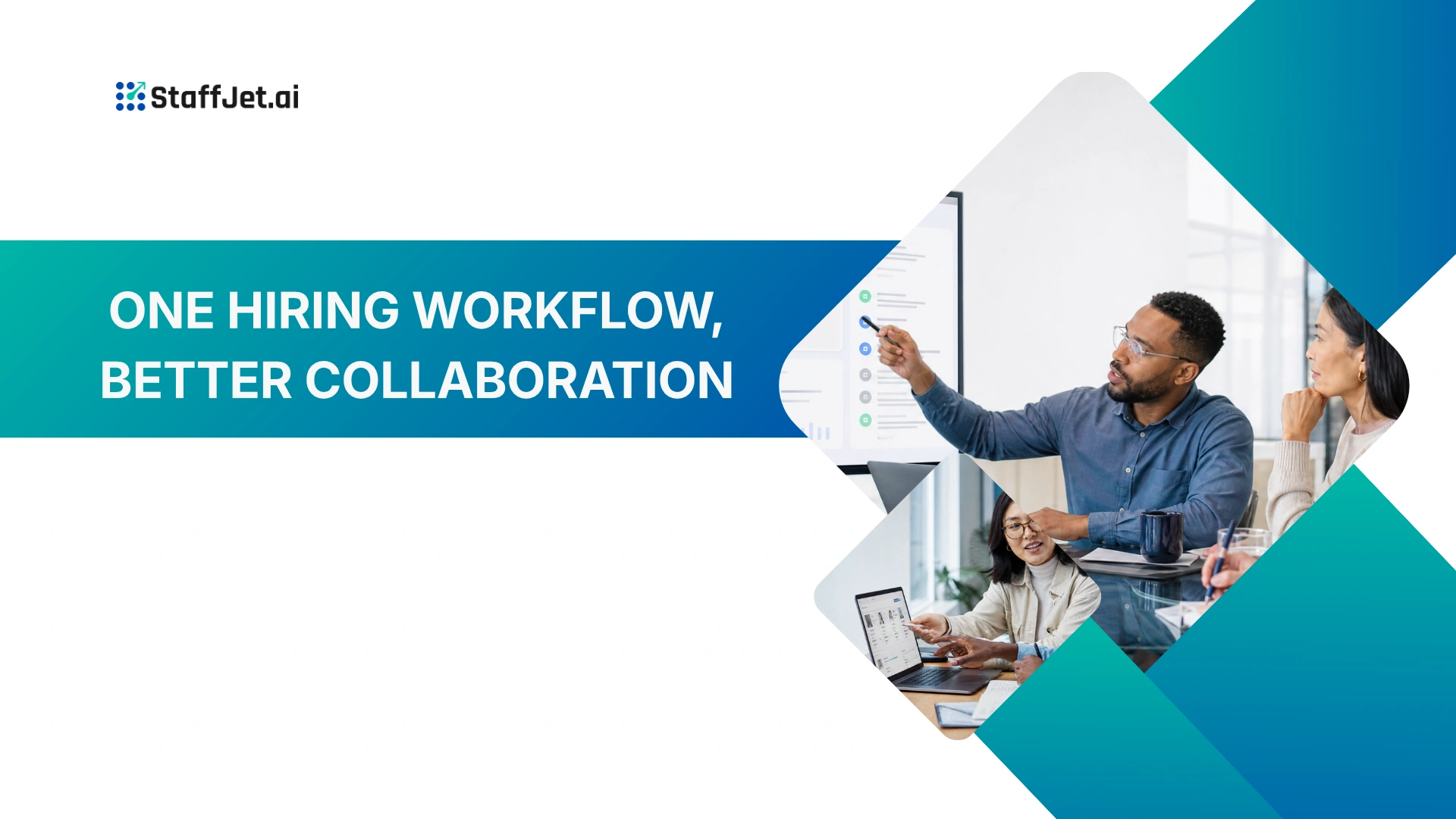
Collaborative hiring use cases help recruiters and hiring managers review the same candidate evidence, reports, scores, and hiring stages.
Recruiters and hiring managers often see different parts of the process.
A shared system helps both sides understand why a candidate was shortlisted, what skills were verified, what the interview showed, what gaps remain, and which candidate should move forward.
This makes hiring discussions more evidence-led and less dependent on memory.
Use Case 7: Recruitment Dashboards and Hiring Reports
Recruitment dashboards and hiring reports help leaders see candidate movement, hiring progress, shortlist quality, and recruiter workload in one place.
Hiring problems are hard to fix when data is scattered.
A unified dashboard helps teams see candidate stages, assessment status, interview status, candidate reports, hiring progress, and delays.
StaffJet, an AI recruitment platform, brings candidate evaluation data into one dashboard for clearer team review.
This gives hiring managers better visibility before final decisions.
How These Use Cases Improve Recruiter Productivity
AI recruiting software improves recruiter productivity by reducing repetitive screening, sorting, scheduling, reporting, and candidate tracking work.
Recruiters should not spend most of their time on admin work.
AI can reduce repeated effort across resume review, candidate ranking, assessment coordination, interview scheduling, status tracking, and report preparation.
LinkedIn reports that talent professionals using generative AI saw about a 20% average workload reduction [LinkedIn, 2025].
StaffJet’s locked metric includes 70% of hours saved per year. Treat this as a platform-reported metric unless independently verified.
How AI Recruiting Software Improves Candidate Quality
AI recruiting software improves candidate quality by helping teams focus on role fit, verified skills, structured interviews, and reviewable reports.
Quality improves when decisions are based on stronger evidence.
AI recruiting software can help teams compare resume fit, skills match, assessment performance, interview evidence, candidate strengths, and candidate gaps.
Best uses of AI in recruitment should support better human decisions, not automatic rejection.
Which Hiring Teams Benefit Most From These Use Cases?
Hiring teams that manage high volume, repeated roles, technical hiring, distributed teams, or recruiter workload benefit most from AI recruiting software.
The strongest fit is usually BPOs, IT services companies, GCCs, recruitment agencies, startups, and enterprises.
These teams often face similar problems:
- Too many applications
- Limited recruiter capacity
- Repeated screening tasks
- Multiple stakeholders
- Pressure to hire faster
- Need for consistent reports
Hiring software is most useful when it removes clear workflow bottlenecks.
What to Check Before Choosing AI Recruiting Software for These Use Cases
Before choosing AI recruiting software, check workflow coverage, recruiter control, assessment support, interview structure, dashboard reporting, and implementation effort.
Ask practical questions before buying.
Does it screen resumes? Does it support profile matching? Can it verify skills? Does it support structured interviews? Are reports easy for hiring managers to understand? Can recruiters review AI recommendations?
AI recruiting software like StaffJet should be evaluated on practical outcomes, not only product demos.
Common Mistakes to Avoid When Using AI in Recruitment
Common mistakes include automating unclear workflows, overtrusting AI scores, skipping recruiter review, ignoring candidate fairness, and failing to measure outcomes.
Avoid these mistakes:
| Mistake | Why it affects hiring |
| Automating a broken process | Faster confusion |
| Overtrusting AI scores | Context may be missed |
| No human oversight | Candidate fairness can suffer |
| Weak role criteria | Screening becomes inconsistent |
| No KPI tracking | ROI remains unclear |
| Too many steps | Candidate drop-off may increase |
Responsible AI, explainable AI, model validation, and structured evaluation remain important.
Final Thoughts: AI Recruiting Software Works Best When It Supports the Full Hiring Workflow
AI recruiting software works best when it connects screening, sourcing, assessments, interviews, collaboration, dashboards, and reporting in one structured workflow.
AI recruitment is not only about speed.
It is about helping hiring teams make better decisions with better evidence.
The strongest hiring teams will use AI to reduce repetitive work while keeping recruiters focused on judgment, candidate relationships, and hiring manager alignment.
Best AI recruiting software, StaffJet, should be evaluated on workflow coverage, recruiter control, reporting clarity, and measurable hiring outcomes.
Key Takeaways
- AI recruiting software use cases go beyond resume screening.
- The seven key use cases are screening, sourcing, skills evaluation, video screening, high-volume hiring, collaboration, and reporting.
- StaffJet supports AI profile matching, AI resume screening, AUTO ASSESSMENT, live AUTO INTERVIEW, and unified dashboard reporting.
- AI can improve productivity, but recruiters still own final judgment.
- The best use cases are the ones that remove clear workflow bottlenecks.
Prioritize the Right AI Recruiting Software Use Cases
Use AI recruiting software to automate the hiring steps that slow your team down most, from screening and assessments to interviews, dashboards, and hiring reports.